Friday, June 17, 2022

Two More by Oppenheim

the Parkers and Walmsely
illustrated by Will Grefé


I introduce E. Phillips Oppenheim in this previous post

An Amiable Charlatan (U.S. title)
(Original UK title: The Game of Liberty)
1915
4/5 stars

An English gentleman, Paul Walmsley, becomes infatuated with a young American woman that he sees regularly at a restaurant.  One evening, her father -- Joseph H. Parker, the amiable charlatan of the title -- abruptly enters the restaurant, suddenly sits at Walmsley's table, begins eating his food, and asks Walmsley to play along.  After this unusual introduction, Walmsley meets Miss Eve Parker, and falls deeply in love with her, despite learning that she and her father are "adventurers".  When these adventures seem to be only cons, Walmsley's desire to marry Eve allows him to turn a blind eye.  When theft becomes an issue, though, Walmsley finds it hard to balance his morals with the apparent amorality of the Parkers.  

This is a funny and charming set of stories with likable characters, a good twist, and solid prose.  The various plots are amusing, with Walmsley watching (and sometimes helping) his prospective father-in-law get in and out of scrapes with Scotland Yard, professional criminals, and even designing young women.  My only complaint is that Eve doesn't figure enough as the book progresses, and is a less dynamic character than the two men.  In general, though, An Amiable Charlatan  is a truly entertaining experience and I definitely recommend it to those who enjoy the light and innocent style of popular Edwardian novels.


Dominey and von Ragenstein,
illustrated  by 
 

The Great Impersonation
1920
4/5 stars

Sir Everard Dominey left England in disgrace eleven years ago, went to Africa, and continued his profligate lifestyle there.  Now, in 1913, he runs across an old acquaintance from his school days, the German nobleman Leopold von Ragenstein .  Their similarity in looks had always been commented on, but now, Dominey's dissipation has left him just a shadow of what von Ragenstein has become.

Von Ragenstein, a thorough patriot, was undertaking work for the government as a Commandant in German East Africa, but has now been instructed to find a way to insinuate himself in English high society.  The opportunity is too good to be missed, and he takes on the identity of his doppelganger and goes to London, certain that Dominey's decade-long absence will make his task easy.

This serious adventure-espionage-drama is a darn fine yarn.  I enjoyed it completely, from compelling start to thrilling finish.  Oppenheim writes well enough that I cared for the characters, was surprised several times, and thought about the plot when I wasn't reading.  I can't rate it a full five stars, but I undoubtedly got five stars-worth of enjoyment from it.

Saturday, June 11, 2022

Two by E. Phillips Oppenheim

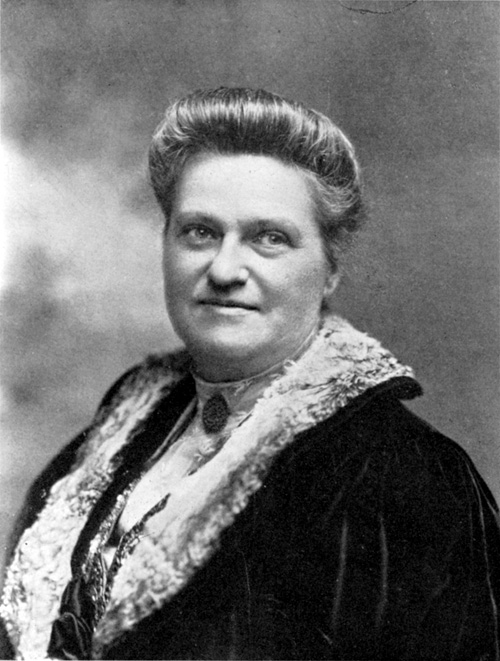
E. Phillips Oppenheim
1866-1946

E. Phillips Oppenheim was a prolific English author of best-selling adventures, thrillers, and mysteries written between 1887 and 1943.  While his novels are certainly not fine literature, they are generally well-written, and can be quite entertaining for those who appreciate this combination of time-period and genre.

The Honorable Algernon Knox, Detective
1913/1920
3/5 stars

This quick read is a set of loosely connected short stories featuring a society gentleman, Algernon Knox.  Most of these were published in Hearst's Magazine in 1913, with the complete collection published in book form in 1920.  

Knox is not a detective exactly, but a man who falls into situations of mystery, danger ,and adventure.  After accidently foiling a plot to steal state secrets from his uncle, a Cabinet Minister, Knox begins to appreciate that he has unexpected brains and abilities, and to relish the chance to use them for the good of others and for the protection of Britain.

The abrupt change in Knox from a vapid young fool to a useful tool of His Majesty's Government is unconvincing, but his character is appealing and sympathetic.  The tales are light (though not light-hearted), dated, and often unbelievable, but generally a good deal of fun as Knox outwits opponents much more skilled in diplomacy and espionage.


The Zeppelin's Passenger or Mr. Lessingham Goes Home
1918
4/5 stars

Published toward the end of World War I, this romantic-espionage-drama features Phillipa, a ferociously patriotic woman living in an English coastal town.  Her husband, Sir Henry, at sixteen years her elder, is apparently too old to be accepted for military duty, and she is both ashamed and angry at  his apparent indifference to his life of civilian inactivity.

Into this situation falls (literally, out of a zeppelin) a German spy, calling himself Lessingham.  He brings letters from Phillipa's twin, an inmate of a German prison, and tries to convince her, for the sake of her brother's well-being, to assist him in his mission.  Knowing that her quiet seafront locale can hold no secrets worth more than her brother's life, she abandons her firmly held convictions and agrees -- but at what cost?

This is a melodramatic but entertaining tale, with all three main characters, though under-developed, being likable and sympathetic, with believably human motives.  Oppenheimer, while obviously burning with patriotism, still admits that the German forces have men just as gentlemanly as the British, and has Phillipa express a wish for peace for all.  The romance is very Edwardian, almost cold to a 21st Century view, but is still effective as an important factor.  Overall, while certainly not a literary treasure, it's an enjoyable read, as well as an enlightening insight into the popular culture of the time. 


Saturday, June 4, 2022

Before the Fact by Francis Iles


Before the Fact

Francis Iles
1932
5/5 stars

Lina McLaidlaw is swept off her feet by the charming, handsome, and slightly disreputable Johnnie Aysgarth.  As she is 28, an intellectual, and not considered a beauty, her parents are convinced that Johnnie is after her for money only.  Nonetheless, Johnnie's apparent sincerity wins her confidence and they are married.  As time goes on, however, Lina begins to notice a streak of amorality in her husband, which worsens until she begins to suspect him of a serious crime.

This novel of psychological suspense is gripping from the first two lines: 
"Some women give birth to murderers, some go to bed with them, and some marry them.  Lina Aysgarth had lived with her husband for nearly eight years before she realized that she was married to a murderer."

As the plot advances, the reader follows Lina's discoveries, fears, compromises, and gradual mental strain, and watches as Johnnie tugs unhappily at the leash she holds on him.  A sense of dread permeates the story, leaving the reader tense and anxious, awaiting the next event.  

Iles (pseudonym of Anthony Berkeley Cox, who wrote cozier Golden Age mysteries under the name of Anthony Berkeley) is an excellent writer, creating prose that is intelligent, convincing, and engrossing.  Before the Fact is memorable and well-worth reading for those that appreciate an atypical crime drama.

Wednesday, June 1, 2022

May 2022 Wrap-Up

Books Read:
The Dark Island by Vita Sackville-West (1934)  4/5 stars
This serious character study shows the life of Shirin in four episodes: one each at the ages of 16, 26, 36, and 46.  The writing is wonderful - intelligent, and gripping - but the bleak and grim themes keep it from being a book one "enjoys".  It is not a novel I would recommend universally, and probably only to fans of the author, but it was still a thought-provoking and memorable read.


Audio Books Completed:
The Case-Book of Sherlock Holmes by Arthur Conan Doyle (1927)  3/5 stars
These are less intriguing than earlier short stories, vary in quality overall, and some in particular have not aged well.  They do contain some iconic moments, though, and are worth reading for the devoted Holmes fan, if only for completeness.
Baroness Orczy

Lady Molly of Scotland Yard by Emmuska Orczy (1910)  4/5 stars
These fun Edwardian short stories of mystery and adventure feature Lady Molly, one of the female agents of Scotland Yard. In the tales, Lady Molly often depends more on a knowledge of human nature than on physical clues, but her deductions are sensible and logical, and, for the most part, don't strain credibility.  Her devoted friend, Mary, narrates the account, and while Mary's over-abundant praise is sometimes annoying, Lady Molly of Scotland Yard is still well-written, nicely plotted, and entertaining. 

The Wintringham Mystery by Anthony Berkeley (1927)  4/5 stars
Though sometimes convoluted, this Golden Age mystery is generally well-written, completely entertaining, and quite intriguing.   

The Two Destinies by Wilkie Collins (1876)  4/5 stars  (my review here)

That Affair Next Door by Anna Katharine Green (1897)  4/5 stars  (my review here)

Lost Man's Lane by Anna Katharine Green (1898)  4/5 stars  (my review here)

The Circular Study by Anna Katharine Green  (1900)  4/5 stars (my review here)

Did Not Finish:
Wuthering Heights by Emily Brontë (1847)
My discussion is here.

Madame Bovary by Gustave Flaubert (1857)
This is a fantastic book -- if translated by Lydia Davis -- and I was looking forward to listening to it on audio.  I found, though, that I couldn't appreciate Flaubert's painstaking, detailed writing and his stunning ability to turn a phrase by listening.  I wrote a long discussion (here) when I read it 2011, and would encourage anyone that hasn't read this classic to read that post before picking up the book.

Warriors, Queens, and Intellectuals by Joyce E. Salisbury from the Great Courses series
This is a group of 36 lectures subtitled "36 Great Women Before 1400" that, having majored in history, I was very much looking forward to hearing.  The blurb explains that these lectures will allow the listener to experience a "another side of history" by spotlighting 36 extraordinary women and how they influenced history. Unfortunately, Professor Salisbury does not do this. Instead, a woman is introduced (sometimes from sketchy sources), a bit of general background history given, then that particular historical woman is shoehorned into the discussion, often as a periphery figure.  I felt that Warriors, Queens, and Intellectuals did not live up to it's promise, nor to the quality I have come to expect from the Great Courses.

Monday, May 30, 2022

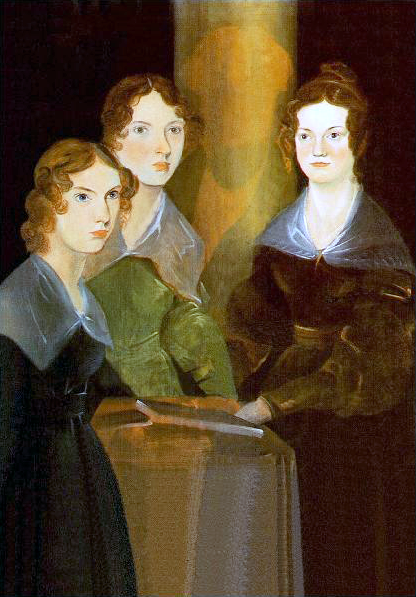
Wuthering Heights by Emily Brontë

the Brontë sisters
painted by Branwell Brontë

Wuthering Heights

Emily Brontë
(1847)
Did Not Finish

When I read this novel previously, I only found it to be the dark and distasteful story of relationships that are abusive, unhealthy, or both, and certainly not the great romance many find it.  When recently discussing it with a friend, she pointed out that it should be viewed as a Gothic novel, and appreciated as that genre.  After pondering on this, I decided I could see that Wuthering Heights certainly includes some of the characteristics of a Gothic novel:

  • gloomy setting
  • elements of the supernatural
  • excessive emotion
  • violence, specifically against women
  • insanity
  • a hero-villain
  • secrets
  • revenge
  • an overarching sense of dread
With this in mind, I decided to give this classic another try.

To begin with, I enjoyed the Gothic atmosphere and the tragic story.

Then, at about the half-way point, I was so repulsed by the cruel, sadistic Heathcliff that I had to stop.  I really can't understand why he is considered to be a romantic hero, or why his and Cathy's attachment is called a great love story.  I had no sympathy for either, and since his actions made my stomach clench, I dreaded returning to the book.

Bottom line is that this classic and I are truly unsuited, and I still feel it be the dark and distasteful story of relationships that are abusive, unhealthy, or both.

(On a side note: I have truly enjoyed the novels of the other two Brontë sisters, and consider both Jane Eyre and The Tenant of Wildfell Hall to be among my favorites.)

Read as part of the Classics Club.  My explanation is here.

Thursday, May 26, 2022

Three by Anna Katharine Green

Anna Katherine Green

Anna Katharine Green
(1846-1935)  is one of the few American mystery authors that I enjoy.  She was among the first authors of the modern "detective story", and had a reputation for writing legally accurate fiction.  Her works were justly popular, and will be excellent reading for those who appreciate novels with the particular mores of the late 19th Century.

The three Amelia Butterworth stories are collected together in one Audible title.  The narration is below average, but the quality of the books made it worth the price.

That Affair Next Door (1897)  4/5 stars 
In this, the first of the Amelia Butterworth mysteries, she notices an odd occurrence at the most respectable house next door.  Investigation reveals that a young woman has been murdered in a mysterious manner.  Miss Butterworth, certain that the Police Detective (Green's often-returning Mr. Gryce) has arrested the wrong man, sets out to solve the problem herself.  As a high-society spinster, she has advantages that the police do not, and makes some surprising discoveries. 

Miss Butterworth is quite an enjoyable narrator, and is written with a delightful sly humor. The writing is good, the mystery intelligent, and the crime well-plotted.  Overall, it's an enormously fun and engaging read.

Lost Man's Lane (1898)  4/5 stars 
When multiple disappearances occur in a town with personal connections for Miss Butterworth, Mr. Gryce, a New York City Police Detective and friend, requests her assistance.  She makes a visit there to secretly investigate the lane in question, and in doing so discovers more mystery than she solves.

This is another completely enjoyable tale featuring these two characters.  Green's writing is genuinely witty and amusing, the story extremely interesting, and mystery quite twisty.  While the means and motive were not fully credible, it was still a most entertaining story.

The Circular Study (1900)  4/5 stars
When a man is found murdered in his study, New York City Police Detective Ebenezer Gryce works to solve the crime.  Miss Amelia Butterworth, society spinster and sometime amateur sleuth offers unexpected and valuable clues in what turns out to be a tragic story of revenge.

This mystery/melodrama is much darker and more serious than the two previous novels in which Miss Butterworth appears.  She only features peripherally and does not narrate this story; as such, it lacks the charm and humor of those prior books.  It more than makes up for it, however, with a well-written twisty plot, and a dose of sensationalism worth of Wilkie Collins himself.  Again, it won't appeal universally, as one must be able to appreciate Victorian-style literature to enjoy it.  I, myself, found it both gripping and satisfying.

Tuesday, May 17, 2022

The Two Destinies by Wilkie Collins


The Two Destinies

Wilkie Collins
1876 
4/5 stars

Collins is a master of the Victorian sensational novel, and this one is a fine example.  The outcome is told at the beginning, but the journey is fraught with enough drama and tragedy to prevent it from becoming too predictable.  A supernatural bond connects the two protagonists, and to the modern reader not accustomed to these melodramas it may seem ridiculous.  Read in the spirit of the times, however, the plot is thoroughly engrossing and even moving at times.  As is typical of Collins, The Two Destinies is well-written, intelligent, and, for fans of this genre, completely entertaining.