Sunday, June 25, 2023

Two by Moray Dalton

Moray Dalton (1881-1963) is the penname of Katherine Renoir (née Dalton), a British author who published two well-received novels, Olive in Italy (1909) and The Sword of Love (1920), before turning to crime fiction in 1924.  Other than the introduction (by crime fiction historian Curtis Evans) in these recently rereleased novels, I've been unable to find out any more about Dalton, nor can I find her photograph.  I must agree with Evans that it is a shame Dalton's fiction was lost to the public for long.
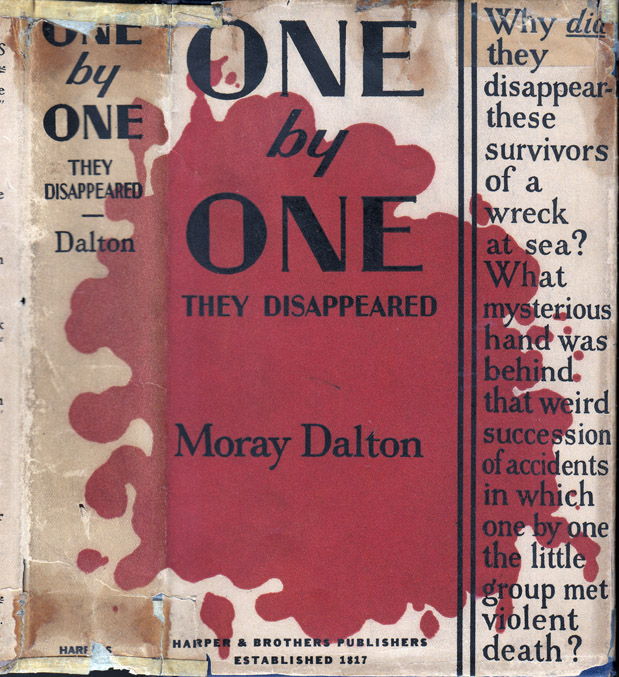


One by One They Disappeared  
(1928)  4/5 stars
Elbert J. Pakenham holds a yearly dinner for his fellow survivors of a tragic accident.  As he is very wealthy with no heirs, he tells these men that he has left his fortune to be divided among them. Unfortunately,  by doing this Pakenham has given someone a reason to murder.  

This is the first book to feature Inspector Collier of Scotland Yard, a likable character with realistic fallibility. The plot is complex, with clever false trails and a particularly good twist, and though it does stretch credulity at times this well-written novel was thoroughly enjoyable.


The Night of Fear   
(1931)  4/5 stars
During a house party, the guests play a game of hide and seek which ends in the discovery of a murder.  The most obvious suspect is arrested, but his steadfast friends are convinced of his innocence, and, at the recommendation of Inspector Collier (who has been removed from the case), they hire private detective Hermann Glide to investigate.  Glide searches for evidence in a race against time, as the court case proceeds.

Collier doesn't figure much in this book, as it focuses more on Glide's search, the characters of the house party, and the court drama.  Glide is not fleshed out well, but that doesn't detract from the story.  The plot is layered, with many surprises and a satisfying conclusion.  Overall, it's well-written, intelligent, and completely engrossing.


comments are temporarily disabled

Thursday, June 22, 2023

Three from the Golden Age


Post After Post-Mortem
by E.C.R. Lorac   (1936)  4/5 stars
In this volume of Lorac's long-running series featuring Inspector Robert Macdonald, a young woman's suicide garners suspicion after her last letter is received.  Scores of lies were told at the inquest to protect her memory, the uncovering of which leads to many clues, and red herrings.  As Macdonald investigates her life, he discovers a myriad of motives among her friends and family.

This is an intelligent, well-written and interesting mystery.  It was complex but not convoluted, twisty enough to keep me guessing, and held my attention throughout. The solution and motive were unanticipated, and not fully credible, but the book is certainly worth reading.


The Black Wings by Moray Dalton  (1927)  5/5 stars
This is a complicated story, and not easy to summarize without spoiling the plot.  It's made up of murder, blackmail, family secrets, abduction, light romance, police procedure, and courtroom drama, with a nod to the classic Jane Eyre.

This book is advertised as "A Golden Age Mystery", but that is not quite accurate.  Though there is a mystery, this is actually a crime novel of suspense and adventure, with elements that are not at all typical of a Golden Age Mystery.  It is well-written, intelligent, and, while over-the-top at times, absolutely absorbing all the way up to the stunning conclusion.


The Tragedy at Freyne by Anthony Gilbert  (1927)  4/5 stars
An artist, Sir Simon Chandos,  is found dead in his study, apparently by his own hand, but a discrepancy reveals that it was actually murder.  His friend, who has loved Chandos' wife for years, is the obvious suspect and is quickly arrested.  A confession from a different party follows, and it appears that the crime is solved, but another friend is not satisfied and proceeds to investigate on his own.

This mystery is clever, interesting, and well-written.  It is narrated in the first person by a Watson of sorts whose believable voice adds greatly to the book.  The solution was unexpected, and may not have been solvable from the information given, but overall this is a satisfying read.


Side Note:
Interestingly enough, all three of these authors are women using pen names, and I was unable to find a photo any one of them!


comments are temporarily disabled

Tuesday, June 13, 2023

Top Ten Tuesday: Bookish Wishes

 Top Ten Tuesday is a feature hosted by Jana at That Artsy Reader Girl.

Today's Top Ten Tuesday top is "Bookish Wishes", with the instructions to list the top ten books you wish you owned.

These five are some of my newest wishes:
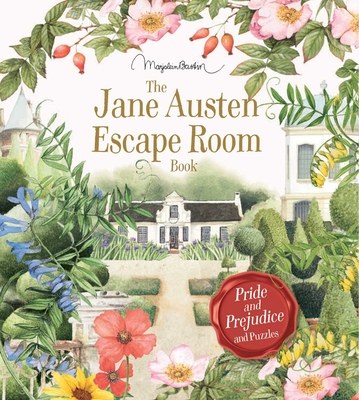
The Jane Austen Escape Room Book by Marjolein Bastin (2023)
This illustrated book supposedly combines the characters of Pride and Prejudice with puzzles to solve, with Bastin's gorgeous artwork.  I'm intrigued!


The World Cloud Classics edition of Mrs. Dalloway by Virginia Woolf (1925, 2022)
Mrs. Dalloway is among my top favorite novels, and the World Cloud Classics editions are so gorgeous, that this was love at first sight for me.


The Word Cloud Classics edition of Alice's Adventures in Wonderland and Through the Looking-Glass by Lewis Carroll (1871, 2016)
The situation is exactly that of Mrs. Dalloway -- a favorite book, a gorgeous edition.


The Big Book of Christmas Mysteries edited by Otto Penzler (2013)
I have another volume edited by Penzler (The Big Book of Female Detectives) which, while I haven't completely finished,  I have thoroughly enjoyed.  As I love holiday mysteries, I'd love to have this one sometime.


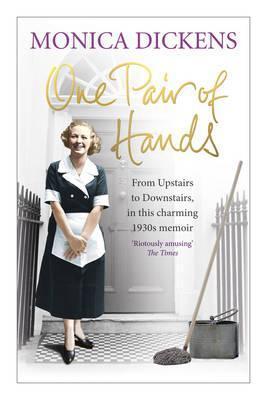
One Pair of Hands: Upstairs and Downstairs, Seen Through the Eyes of an Ex-Debutante Turned Cook by Monica Dickens (1939)
One reading of the title, which says it all, and my interest was totally piqued -- it raises so many questions!

While these five have been on my list the longest:
These two are from the Furrowed Middlebrow imprint of Dean Street Press, which I wish-listed in 2018.  I don't even know what they are about, but I've loved all I have discovered via this publisher, and am eager to try new ones.


Lastly are three short story collections, edited by Martin Edwards, from the British Library Crime Classics series.  They've also been on my list since 2018, about the time I fell in love with the BLCC


comments are temporarily disabled

Monday, June 12, 2023

The Benson Murder Case by S. S. Van Dine

Willard Huntington Wright, 1888 – 1939

The Benson Murder Case

S. S. Van Dine
1926 
4/5 stars

This is the first in the series featuring amateur detective Philo Vance.  Van Dine (pseudonym for American art critic Willard Huntington Wright) was a popular and best selling author, whose Philo Vance books became movies and radio programs.

While an arrogant, foppish aesthete, Vance is nonetheless appealing for his intellect, perspicacity, and surprising amount of compassion.  While not fully fleshed out in this early novel, the reader can still see facets to his personality.

The plot was intriguing and entertaining.  There were many possible believable solutions, and only rarely did Vance seem to pull a clue from thin air.  On the whole, this is a well-written, interesting, and intelligent mystery and I look forward to reading more of the series.


comments are temporarily disabled

Word of the Week: Quidnunc

"Word of the Week" is a meme hosted by the Plain-Spoken Pen on Mondays in which we share a word that we find entertaining, enlightening, edifying, or just plain fun to say! 


I just finished reading The Benson Murder Case by S. S. Van Dine (published in 1926), and came across a new-to-me word:

From various sources on the internet, I learned that quidnunc, from the early 18th century, is a mashup of the two Latin words "quid" and "nunc" meaning "what now", mimicking the question of a nosey listener.  What a great word!

Comments are temporarily disabled.


Thursday, June 1, 2023

May 2023 Wrap-Up


Books Read: 
To the Letter: A Celebration of the Lost Art of Letter Writing by Simon Garfield (2013)  4/5 stars
This nonfiction book is exactly what it claims to be: a celebration of letter writing.  Garfield gives short biographies of some of the most famous letter writers in history, discusses the art and history of letter writing, and breaks the chapters up with the love letters written between a solider in World War II and his girl back home.  He covers a lot of territory and not always in depth, but it's a genuinely enjoyable experience, especially for one who still writes, receives, and cherishes letters.


Audiobooks Completed:
I continued my reread of Laurie R. King's Mary Russell/Sherlock Holmes series this month.  I enjoyed these three even more this second time.
Garment of Shadows (2012) 4/5 stars
Dreaming Spies (2015) 4/5 stars
The Murder of Mary Russell (2016) 5/5 stars

I began the 15th of the series, Island of the Mad, but did not enjoy it nearly as much as my review showed I did previously.  I listened to about a third of it, and then decided not to finish. As I had read the most recent two of the series within the last twelve months, I decided it was time for new authors.

The Body Politic by Catherine Aird  (1990) 3/5 stars
The plot is somewhat convoluted in this well-written mystery, but the book is fully enjoyable,  Aird's sly wit is laugh-out-loud funny at times, and the performance of the audiobook narrator, Derek Perkins, adds to it immensely. 

The Great Mistake by  Mary Roberts Rinehart (1940)  5/5 stars
I'm a long-time fan or Rinehart, and to me, this is one of her best.  It has a complicated plot, but all the pieces are available, and it makes sense in the end.  The Great Mistake is well-written, slyly humorous, and nicely plotted, and her famous tongue-in-cheek "had I but known" foreshadowing is excellently done.  This thoroughly enjoyable mystery would make a good introduction to Rinehart for those who enjoy the mysteries of the 1940s.


Comments are temporarily disabled.

Monday, May 1, 2023

Word of the Week: Louche

 "Word of the Week" is a meme hosted by the Plain-Spoken Pen on Mondays in which we share a word that we find entertaining, enlightening, edifying, or just plain fun to say! 


I'm currently reading To the Letter by Simon Garfield, and he used the intriguing word "louche", which had me scrambling for a dictionary.  According to multiple sources, it is from the French, originally meaning "squinting" or "cross-eyed", and describes something that is not socially acceptable -- immoral, disreputable, sordid -- but yet, at the same time, kinda appealing.  A rakish fellow, for example, or (the fictional versions of) pirates, gangsters, or smugglers.  


How about you? Can you think of any good examples of this great word?  And did you find any interesting words last week?