Tuesday, August 29, 2023

The Nurse Hilda Adams Mysteries by Mary Roberts Rinehart


Mary Roberts Rinehart wrote three novellas and two novels about Nurse Hilda Adams, who was recruited to work undercover with the homicide department.

Mary Roberts Rinehart
The Buckled Bag and Locked Doors  (1914) 3/5 stars
These two novellas introduce Hilda Adams, a nurse who is engaged by a Police Inspector to do undercover work.  Told from the first-person point-of-view of Nurse Adams, they are at times both delightful and amusing.  The mystery in both is quite interesting, and the stories were enjoyable overall.


Miss Pinkerton  (1932)  4/5 stars
When an elderly lady's nephew commits suicide, Police Inspector Patton is skeptical and arranges that Nurse Hilda Adams should be the nurse in charge of the old woman's care.  This well-written novel is told in Nurse Adams' delightful and amusing voice, and is both engrossing and entertaining.

The Haunted Lady (1942)  4/5 stars
A family matriarch, convinced that someone in her own house is trying to scare her to death, requests police assistance, and Nurse Hilda Adams is sent in undercover.  Unlike the previous stories featuring Nurse Adams, this one is not told from her point of view.  It's understandable, as the reader will need more information than Hilda could give in first-person, but I certainly missed her delightful, amusing voice.  The mystery itself was nicely twisted and satisfying.

Episode of the Wandering Knife  (1950)  4/5 stars
This is a collection of two novellas (The Episode of the Wandering Knife and The Secret) and one short story ("The Man Who Hid His Breakfast").  The first novella was laugh-out-loud funny and a true pleasure, worthy of five stars.   The second novella, featuring Nurse Hilda Adams, was implausible, though certainly interesting, but only three star material.  They sandwich the entertaining and well-written short story, following a retiring Police Inspector's final case, which was not fully satisfying, earning four stars from me.

Friday, August 4, 2023

July 2023 Wrap Up


Books Read:
The Strange Case of Harriet Hall by Moray Dalton (1936)  4/5 stars  (my review here)

Death in the Dark by Moray Dalton (1938)  4/5 stars  (my review here)

The Art School Murders by Moray Dalton (1943)  3/5 stars  (my review here)

Unexpected Night by Elizabeth Daly (1940)  3/5 stars  (my review here)

Deadly Nightshade by Elizabeth Daly (1940)  3/5 stars  (my review here)

Murders in Volume 2 by Elizabeth Daly (1941)  4/5 stars  (my review here)

The House without the Door by Elizabeth Daly (1942)  4/5 stars  (my review here)

Smallbone Deceased by Michael Gilbert (1950)  3/5 stars
This murder mystery is well-written and generally enjoyable, but the combination of a most unlikely disposal of the victim and a not fully convincing motive made it only an average read for me.

The Chignon Scarf  by Mignon G. Eberhart (1939)  3/5 stars
This mystery is improbable and, at times, silly, with a case of love-at-first-sight, a remote and cut-off location, and overdone drama.  It's not Eberhart's best, but is still undeniably entertaining for those who enjoy the light suspense novels of this era.

The Canary Murder Case by S. S. Van Dine (1927)  3/5 stars
Georgette Heyer
This is an interesting, mostly entertaining, and generally well-written locked room mystery with a clever solution.  Unfortunately, Philo Vance, the amateur detective and hero, only figured it out by accident and that lessened my enjoyment.

Why Shoot a Butler? by Georgette Heyer  (1933)  4/5 stars
Heyer's Regency novels are better known than her Golden Age mysteries, and rightly so, but this one was quite enjoyable.  It has a solid and twisty plot with plenty of clues, and is filled with Heyer's typically excellent dialogue and signature wit.   The culprit is obvious early-on, but the journey to the solution is where the fun lies.  

Audio Books Completed:
Queen Victoria's Matchmaking: The Royal Marriages that Shaped Europe by  Deborah Cadbury (2017)  4/5 stars
This is a nonfiction discussion of European politics during the late Victorian era as seen through the lens of the marriages of Queen Victoria's children and grandchildren.  The title suggests that it will tell of the Queen's personal involvement in the marriages, which was not actually a lot, but the subtitle truthful shows that it only features those marriages that affected European politics.  I found both aspects to be somewhat disappointing, as I would have enjoyed learning about some of the Queen's lesser-known children and grandchildren.  Nonetheless, I found it generally well-written and thoroughly entertaining and informative; I would certainly recommend it to other armchair historians also interested in this area.

In Search of a Kingdom: Francis Drake, Elizabeth I, and the Perilous Birth of the British Empire by Laurence Bergreen (2021)  3/5 stars
This is a nonfiction account of Francis Drake's circumnavigation of the globe,  his role in defeating the Spanish Armada, and his relationship with Queen Elizabeth I.  The topic itself is fascinating, but Bergreen didn't do it full justice.  The narrative rambles at times, tends to repeat itself, and, while detailing some events, gives very little information on others.  So, while I liked it and learned new-to-me information, I can only recommend it with the caveat that it is not a lively or completely enjoyable book.

comments temporarily disabled

Tuesday, July 18, 2023

The House without the Door by Elizabeth Daly


The House without the Door
Elizabeth Daly
1942 
4/5 stars

Vina Gregson was acquitted of her husband's murder, but must live in seclusion due to all the negative publicity.  When attempts are made on her life, she asks amateur sleuth Henry Gamadge for help, with the hope that he can not only come to the bottom of the threats to herself, but find Mr. Gregson's true killer as well.

Gamadge continues to blur the line between what the law requires and what he thinks is appropriate, giving him a more dynamic personality than in the early books.  By this fourth book in the series, Daly has become better at plotting a crime that is solvable by the reader, and yet still obscure enough to be an enjoyable read.  The book is intelligent and well-plotted, as well as  entertaining and engrossing. That, combined with a good twist and a rewarding solution, kept me so interested that I read it over the course of 24 hours.  While it's not perfect, I certainly recommend it.

comments temporarily disabled

Wednesday, July 12, 2023

Three by Elizabeth Daly

Elizabeth Daly (1878-1967) was an American author who wrote light verse and prose for magazines, until she published her first novel (Unexpected Night) at the age of 60.   She was an honorary member of the Mystery Writers of America, and was awarded a "Special Edgar" by them in 1961.  I don't generally care for crime novels based in the U.S., but the books I've read by Daly have been consistently engaging and enjoyable. 


Unexpected Night
 (1940)  3/5 stars
Henry Gamadge, an expert in detecting document forgeries, is on hand when a mysterious death occurs.  He has no reason to investigate, but he and the State Detective discover that Gamadge has an uncanny knack of reading people, sorting out the truth from lies and irrelevancies, and solving mysteries.

This is Daly's first novel and it is a bit rough around the edges, with characters that are not fully developed.  Furthermore, I don't think the clever crime could be solved from the information given. Despite that, it's entertaining, intelligent, and a promising start to the Gamadge series.
 
Deadly Nightshade (1940)  3/5 stars
Several children in a Maine resort town are given nightshade berries by a stranger; while two recover, one dies and another goes missing.  The State Detective on the case is a friend of Henry Gamadge, and knows first hand about bookish Gamadge's unexpected ability to understand human nature and, as a result, see clearly in otherwise murky situations.  As a result, Gamadge runs up to Maine for the weekend to put his skill to the test.


This is an intelligent, generally well-written, and engrossing mystery with a pleasingly complex plot and solution.  Gamadge is a likable character, despite not being fully fleshed. Like the first of the series, I don't know that the reader will come to the correct answer based solely on the clues, but that didn't lessen my enjoyment.


Murders in Volume 2 (1941)  4/5 stars
A stranger comes to Henry Gamadge, an expert in antique books and forgeries, with a tale of a bizarre swindle being practiced on her wealthy uncle.  She and her family feel that Gamadge's particular line of work make him particularly suited to uncover the truth.  Before Gamadge can expose the fraud, there is a murder.  Then another.  Gamadge soon finds himself partnering the police as his talent for understanding people and motives and finding hidden truths cause him to uncover the why and how of the crimes.

This third in the series is agreeably complicated, with an interesting plot, and a satisfying conclusion.   Gamadge's personality is more rounded than previously, and Daly handles the large cast of characters well.  I thoroughly enjoyed this mystery and look forward to reading more of Gamadge's adventures.


comments temporarily disabled

Saturday, July 8, 2023

The Moray Dalton Binge Continues


The Strange Case of Harriet Hall 
by Moray Dalton (1936)  4/5 stars
This mystery features Inspector Collier again, Dalton's believable and likable Scotland Yard Detective, who is assigned to the case when a woman is found in a well, obviously murdered.  The culprit seems obvious, but Collier, who is not as hard-boiled as others of his occupation, is not convinced. 

As I have come to expect from Dalton, The Strange Case of Harriet Hall  is well-written, intelligent, and entertaining.  It also has an engrossing plot which, combined with a fantastic ending, makes for a totally enjoyable read. 

Death in the Dark by Moray Dalton (1938)  5/5 stars
A young acrobat, David Merle, is found guilty of the murder of a wealthy, eccentric theatre patron, Joshua Fallowes, but his sister Judy firmly believes in his innocence.  With some encouragement from a new friend, Judy sets off to infiltrate the family that benefitted most from Fallowes' death, Oliver Ramblet and his half-sisters.  The Ramblet's live at Sard Manor, a small, ill-funded and floundering zoo.  As a housemaid there, Judy uncovers enough secrets to put her life in danger.

Scotland Yard Detective Hugh Collier learns about the crime long after the trial and, with only days until Merle's execution, becomes convinced that Judy is right.  In a race against time, Inspector Collier must uncover the real culprit and prevent the death of an innocent man.

There are many uncommon elements in this mystery/suspense novel, as well as a variety of unusual characters, a memorable plot, and an extremely likable and spunky heroine. It (like the previous one) is well-written, intelligent and entertaining. This may well be my favorite Dalton novel, for it's unique story as much as for it's overall quality.

The Art School Murders by Moray Dalton (1943)  3/5 stars
A model is found murdered in a formerly prestigious art school in a county outside London, and Scotland Yard is called in.  The country is swathed in a blackout due to the War, which helps the murderer commit two more crimes before Inspector Hugh Collier is able to solve the case.

Though still well-written and generally enjoyable, this is the weakest mystery by Dalton that I've read.  Too much relies on information never given to the reader, making the solution more frustrating that satisfying.


comments temporarily disabled

Saturday, July 1, 2023

June 2023 Wrap Up

Books Read
The Benson Murder Case by S. S. Van Dine (1926)  4/5 stars  
This is the first in the series featuring amateur detective Philo Vance.  Van Dine (pseudonym for American art critic Willard Huntington Wright, 1888 – 1939) was best selling author, and even from this first in the series, it's easy to see why.  An arrogant aesthete, Vance is nonetheless appealing for his intellect, perspicacity, and a surprising amount of compassion.  There were so many possible believable solutions that I wavered back and forth as to who was the guilty party.  Only occasionally did Vance seem to pull a clue from thin air, and on the whole this is a well-written, interesting, and intelligent mystery. 

Post After Post-Mortem by E.C.R. Lorac   (1936)  4/5 stars  (my review here)

The Black Wings by Moray Dalton  (1927)  5/5 stars  (my review here)

The Tragedy at Freyne by Anthony Gilbert  (1927)  4/5 stars  (my review here)

One by One They Disappeared by Moray Dalton  (1928)  4/5 stars  (my review here)

The Night of Fear by Moray Dalton  (1931)  4/5 stars  (my review here)

The Belfry Murder  by Moray Dalton (1933)  4/5 stars (my review here)

The Mystery of the Kneeling Woman by Moray Dalton (1936)  5/5 stars (my review here)


Audiobooks Completed:
A Share in Death by Deborah Crombie (1993)  3/5 stars
This is the first in what has become a lengthy and well-regarded series.  It is attention-holding and entertaining, but seemed too contrived and not fully convincing.  I enjoyed it enough, though, that I will most likely continue the series.

The Dutch Shoe Mystery by Ellery Queen  (1931)  3/5 stars
Ellery is invited to witness a surgery, but the patient is murdered beforehand; he lends his investigative talents to his father, Inspector Queen of the NYC PD, but they struggle to find the solution.  This is an early Ellery Queen, and he's more pompous and less sympathetic a character than he becomes later in the series.  The mystery itself is layered, and while the clues are available for one part of the solution, I felt cheated by the solution to the second aspect.  It's still entertaining, though, and gives the reader a taste of NYC in the late 1920s.  

Fortune's Children by Arthur T. Vanderbilt II  (1989)  4/5 stars  (my review here)

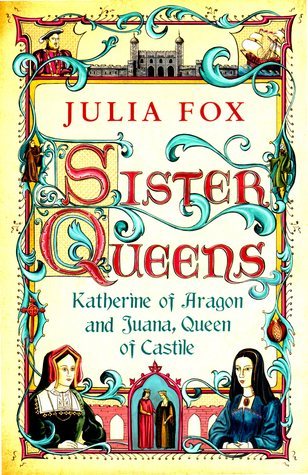
Sister Queens: The Noble, Tragic Lives of Katherine of Aragon and Juana, Queen of Castile 
by Julia Fox (2012)  4/5 stars
This easy to read nonfiction account follows sisters Katherine of Aragon and Juana, Queen of Castile from marriage to death, showing how they shaped their world, and attempting to dispel the persistent negative portrayals of the two.   Fox is definitely prejudiced to her own point-of-view, but makes some compelling arguments.  There were inferences made, as well as some conclusions that seemed based on weak evidence, that I would want to research  myself before I could fully accept the information.  Otherwise, it's both entertaining and enlightening.


comments temporarily disabled

Two More by Moray Dalton

I've been binge-reading mystery/thrillers by Moray Dalton the past couple of weeks.  Here are two more.  (See this post for biographical information on Dalton.)


The Belfry Murder 
(1933)  4/5 stars
It's impossible to give a coherent summary of the plot of this mystery/thriller, as it is complicated, elaborate, and layered.  While requiring a suspension of belief at times, it's also completely enjoyable, well-written, and thoroughly attention-holding.  Inspector Collier, Dalton's believable recurring character, is sometimes uncertain and fallible, making him quite likable.  It is full of clues and false clues with a few twists, and is overall an entertaining read.


The Mystery of the Kneeling Woman (1936)  5/5 stars
When two murders occur within hours of each other in a small county, a Scotland Yard Detective, Inspector Collier, is sent to investigate. The more Collier uncovers about the victims, the more complex the case becomes.  Collier becomes friends with Toby, the boy who found the first, and the vicar, the only friend of the second, making the local police force feel that he may be biased.  

As I have come to expect from Dalton's novels, this is well-written and engaging.  In addition, it's an absorbing mix of mystery, suspense, police procedure, and court room drama, with a memorable solution.  I certainly recommend it.


comments temporarily disabled