Books Read:
No physical books were read this month, as I only played and cross stitched in my spare time.
Audio Books Completed:
The Duke's Children by Anthony Trollope (1880) 5/5 stars
This is the final book of Trollope's Palliser series and, in my opinion, the best. Despite it's length (21 hours/525 pages), I was engrossed throughout. It is well-written, insightful, often humorous, and completely entertaining. I was sorry to see it -- and the series -- end.
The Warden by Anthony Trollope (1855) 3/5 stars (my review
here)
 |
| Elizabeth von Arnim |
Daddy-Long-Legs by Jean Webster (1912) 4/5 stars
This novel is made up of the chatty letters of Jerusha ("Judy") Abbott, an orphan who is sent to college by an anonymous donor. It's charming and humorous and, while light and short, is quite entertaining.
Elizabeth and Her German Garden by Elizabeth von Arnim
(1898) 4/5 stars
This charming semi-autobiographical novel follows the titular Elizabeth over the course of a year as she journals about her garden, her family, her friends, and her daily life. It's often funny, with a slyly tongue-in-cheek humor, which caused me to laugh out loud several times. Though short, it's engagingly written, memorable, and enjoyable.
Parnassus on Wheels by Christopher Morley (1917) 4/5 stars
Spinster housewife Helen McGill buys a traveling bookstore -- wagon, horse, and dog included -- from the owner, Roger Mifflin, who is planning to retire to author a memoir. Told in the first person by Helen, this short tale of her adventure is a charming, feel-good ode to books and readers. Despite the brevity and lightness, it's filled with vibrant characters and an engaging plot. I absolutely loved this little gem, from beginning to end.
False Dawn by Edith Wharton (1924) 3/5 stars
This is the first novella in Wharton's "Old New York" series. It's a rather dull story with flat characters and, while well-penned in other ways, is forgettable.
The Old Maid by Edith Wharton (1922) 3/5 stars
Though written first, this is the second novella in the "Old New York" series, and the best known/most popular. Wharton does portray the emotions and thoughts well, but the characters were cardboard and the plot predictable. I found it underwhelming and disappointing, especially considering how highly lauded it is. (There are two more in the series, but I dreaded the thought of continuing.)
Legend in Green Velvet by Elizabeth Peters (1976) 3/5 stars
This escapade is illogical and unbelievable, but still a good deal of fun. As is typical of Peters' adventure novels, it features a strong female protagonist with lots of history discussed; this one focused on Scottish history, and was quite interesting. Overall, while it's just an average read, if one isn't expecting anything other than light enjoyment, it doesn't disappoint.
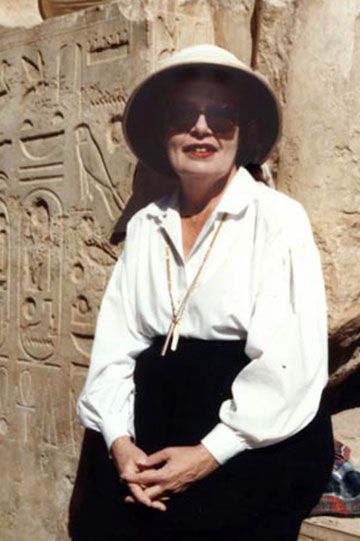 |
| Elizabeth Peters |
The Camelot Caper by Elizabeth Peters (1969) 3/5 stars
Jessica makes her first visit to England to meet her estranged grandfather, but finds herself involved in a dangerous mystery. This story is light, implausible, and not as well-written as Peters' later novels, yet it's easy to ignore the absurd and just enjoy the adventure.
Borrower of the Night by Elizabeth Peters (1973) 4/5 stars
This is the first of a series featuring American art historian Vicky Bliss, and finds her following medieval clues to a potential lost masterpiece. It's a fun and sometimes suspenseful adventure, with snappy dialogue, likable characters, and an entertaining, if improbable, plot.
Street of the Five Moons by Elizabeth Peters (1978) 4/5 stars
This is the second Vicky Bliss adventure, and she follows an excellent forgery to Rome in hopes of finding the culprit. Again, it's a fun, humorous and witty mystery-suspense, with likable characters and a fully entertaining, though not fully believable, plot.
Did Not Finish:
Barchester Towers by Anthony Trollope (1887)
I loved Trollope's Palliser series -- every one was a five-star book to my mind -- and yet the Barsetshire series has not grabbed me. This is the second in the series (see above for book one) and I listened to several hours, but was simply not interested in story of the characters. Maybe it is too soon after the Palliser books; maybe if I try again in a few years, I be struck by the Barsetshire novels. For right now, though, I am extremely disappointed.
The Haunted Bookshop by Christopher Morley
I absolutely loved Parnassus on Wheels (review above) and was excited to read this, the sequel. Unfortunately, in the time lapsed between novels, Morley seems to have forgotten how he described his characters, for they lack many of their previous qualities and all of their dynamic personality. I listened to a few hours, but could not care for anyone in the story, nor about the plot. Such a disappointment.


