Monday, April 7, 2014

Terms & Conditions by Robert Glancy

Terms & Conditions 
Robert Glancy
3/5 stars

I was given this book by the Amazon Vine program in return for an honest review.

Terms and Conditions is the story of Frank, a lawyer who specializes in the fine print terms and conditions of contracts, as he recovers from an accident-induced case of amnesia.

The arrangement style of the novel is clever: it is divided into small chapters (from as short as one page, up to a few pages long) titled "Terms and Conditions of ____" with the blank being filled in with the topic of that chapter, followed by a by-line. The chapters often have footnotes, some of which have their own footnotes, adding to the feel of a document with small print. I enjoyed this aspect of the novel immensely.

It is written in the first person point of view, with Frank as the not-always-reliable narrator. The reader discovers bits and pieces of his past at the same time as Frank does, with the other characters shifting likable to unlikable as Frank remembers more.

The plot itself is not particularly complex, and I was easily able to "figure out" what would happen in advance. The denouement tied up everything into a too-perfect ending, which I found unsuited to the story itself.

Frank, as a narrator, was amusing and sad, yet I could not feel empathetic toward him, possibly because he did not appear to have the depth needed for a character undergoing such circumstances. The other characters (major and minor) were also not fully developed, and at times the motives and motivations were not convincing.

Despite this, despite not being fully interested in the plot or the characters, I found myself compelled to finish. Glancy's prose was smooth and the unusual style worked well. I will be most interested to see his next work, to see if he can develop plot and characters to the level of his style and prose.

Note: This is my opinion; on Amazon, 47% of the reviews were 5 stars.


The Quick: A Novel by Lauren Owen

The Quick: A Novel
Lauren Owen
3/5 stars

I was given this book by the Amazon Vine program in return for an honest review.

The Quick is an ambitious novel of Gothic and preternatural styles that takes place in Victorian London. It follows the traumatic adventures of James (the rather stereotypical shy poet just down from Oxford trying to find life and excitement in London) and his sister Charlotte (another somewhat stereotypical character from Victorian literature, being the sheltered damsel who bravely takes on the world to help her brother) as they discover a shocking, sinister, secret society.

I think that Ms. Owen did herself a disservice by not hinting enough during Part One of the events that were to come. I had understood this novel to be of the alternate history and preternatural genres, and therefore had to push myself to continue to read the rather generic love story until the first clue surfaced during Part One, thinking perhaps I had been misinformed.

On the other hand, I do feel that the publisher's attempt to keep the topic "secret" by not being upfront about the paranormal topic of The Quick will be a source of frustration to most readers. Called "suspense", with alluded mystery, it will not draw the appropriate audience. Called what it is--a vampire novel--the right readers will flock to it and be able to give it balanced reviews.

Ms. Owen's great strength is her ability to write in different voices, points of view and styles. I particularly enjoyed her use of journals and letters. I will confess, however, that due to the amount of characters telling this story, I did find myself overwhelmed by frequent changes of narration style and voice. Instead of being an asset, the varied points of view/style began to create interruptions, cause a jumpy narrative, and keep the novel from flowing smoothly.

I was also overwhelmed by the detail and amount of the plot. The Quick contains an extremely interesting story, but I found myself bogged down again and again by the vast amount of information I needed to retain to keep up with the action. This amount of detail often led to a slow, laboriously paced story.

I was also, sadly, unable to feel a connection to any of the important characters. None were strong enough to be the "hero" of the novel, and some were not convincing in action or motive.

The Quick is certainly an ambitious novel, showing that Ms. Owen is talented as a writer and has a highly gifted imagination. Her prose is generally polished and often elegant. She also did a wonderful job evoking the atmosphere with historically accurate details.

As this is a genre for which I have a particular fondness, I expected to be enraptured over The Quick and am disappointed to have to give it only three stars.


Note: This is my opinion; on Amazon, 24% of the reviews were 5 stars.


Sunday, April 6, 2014

The Confabulist: A Novel by Steven Galloway

The Confabulist
Steven Galloway
2/5 stars

I was given this book by the Amazon Vine program in return for an honest review.

According to the blurb, The Confabulist is a "narrative that weaves together the rise and fall of world-famous Harry Houdini with the surprising story of Martin Strauss", whose fate was tied with that of Houdini's. Given that, I expected to read a fictionalized account of Houdini, "woven together" with that of Strauss. What I got instead was a few chapters about Martin and his mystery (that was easily solved long before the end of the book), a small part where the two lives do come together, and the rest of the book being a fictionalized and alternative account of Houdini's life (sadly written in rather dull prose).

Martin's life and story were interesting, the only reason I continued to read, and so I was disappointed that the focus was not actually on him. I am, honestly, not quite certain as to why Martin was even introduced as part of this novel--so little did he feature. Given his obvious interest in Houdini and apparent disinterest in Martin, Galloway would have done better to have simply written the life of Houdini (hopefully with more verve and liveliness) and left out Martin's "mystery" entirely.


Note: This is my opinion; on Amazon, 47% of the reviews were 4 stars.


Friday, March 21, 2014

Chasing the Rose: An Adventure in the Venetian Countryside by Andrea Di Robilant


Chasing the Rose: An Adventure in the Venetian Countryside
Andrea Di Robilant
5/5 stars

I was given this book by the Amazon Vine program in return for an honest review.

In Chasing the Rose, di Robilant chronicles his attempts to uncover the identity of a pink rose, lightly scented of peaches and raspberries, found on a former family estate. This rose was most likely brought back from France by his great-great-great-great- grandmother Lucia, and seems to be one of the "lost" old rose varieties.


In this academic and horticultural journey, di Robilant introduces the reader to rose growers and rose species, gives a history of roses in Europe, shares how Lucia developed a passion for roses from the Empress Josephine, and allows the reader to join him in his quest to identify and register his mystery rose.

Chasing the Rose is well-written, with smooth and graceful prose in a charming style, enhanced by elegant illustrations. In fact, reading this memoir is akin to a walk in a rose garden: the story paths meander at a slow and luxurious pace, sometimes winding back upon themselves, but with the end result being a thoroughly delightful experience.


Monday, November 11, 2013

Princesses Behaving Badly: Real Stories from History Without the Fairy-Tale Endings


Princesses Behaving Badly: Real Stories from History Without the Fairy-Tale Endings
Linda Rodriguez McRobbie
2/5 stars


Princesses Behaving Badly is a collection of mini-biographies (ranging from a few paragraphs to a few pages) of various royal (or royal-wannabe) women over a wide selection of history and cultures. The premise is that these are rebellious women who broke with the traditions of society, and promised to be a highly entertaining and interesting book.

Unfortunately, McRobbie writes about her subjects in a colloquial, flippant and at times campy style, which detracts from the subject matter. I've no doubt she intends to be humorous and accessible, but (for me) it clashed with the seriousness of her topic. For example, her use of terms like "crazy cat lady", "baby maker", and "broad" feels derogatory, not funny.

In a book that is supposed to be lauding women who are not typical of society's expectations, McRobbie manages to portray many of these ladies in a negative, as opposed to a neutral, light. Conversely to the premise, McRobbie appears to judge their actions by the very standards that these "princesses" faced in their own time. I was very disappointed by this; I had expected Princesses to be more on the lines of the "Uppity Women" series.

There is no doubt that the information was truly interesting, but I think the book would have benefited from more detailed biography on fewer subjects, instead of the small amount given on a large number. Photos or illustrations would also be helpful; I don't know if these will be included in the final copy.

Another point of irritation for me was the cover. It shows a slovenly drunk woman and a passionate lesbian kiss, neither of which actually occur in the book. I felt that this again was an example of trying to be humorous about the topic, but instead it depicted women in a manner that is supposed to be insulting (the drunk) and shocking/titillating (the kiss).

Overall, I was disappointed in this book as (based on the cover blurb) I expected it to be a celebration of individuality, of rule breaking, of women who didn't "stay in their place". Instead, it appeared as if McRobbie couldn't make up her mind as to whether she wanted to promote or condone this "bad behavior"; she seems to send mixed messages.


If McRobbie had approached her topic with a less jokey tone and had seemed to respect her "princesses" more, I think it could have been an excellent read. As it was, I would not recommend it. If this is a topic of interest, I would instead recommend the "Uppity Women" series by Vicki Leon, or Royal Pains by Leslie Carroll.

I was given this book by the Amazon Vine program in return for an honest review.

On a personal note: What the deuce?!  Who is her intended audience?  I can't see it being well received by feminist readers. . . perhaps she intends it for young adults?  If so, I wouldn't recommend it for that audience either.  

I'm just puzzled by her attitude toward her subject.  I was so turned off by her slangy language and the disrespect that I felt she was showing these women, that I could hardly finish it.  


Wednesday, October 9, 2013

The Classics Club: Breakfast at Tiffany's

(about the classics club)

.
I first read Breakfast at Tiffany's in high school, after I saw and fell in love with the movie.  I found the novella a sad disappointment, as it wasn't like the movie, so promptly pushed it out of my mind.

As an adult, I wasn't so impressed with the movie--the horrible portrayal of Mr. Yunioshi in particular and pretty much everything else in general--so I began to think maybe I needed to reread the novella and see what Capote really intended.

I'll confess, I'm just as unimpressed as I was some twenty years ago, though not for the same reasons.


Frankly, very little.

Louise Brooks
I did think that Holly looked (not at all like Audrey Hepburn, but) like a blonde Louise Brooks, with even fuller lips.  The description of her resembled Hepburn in no way whatsoever; I can't imagine why she was cast.  Having set it in the present day when they filmed it, the clothing and manners were all wrong in the movie as well; I was glad that I had the knowledge to be able to imagine the right clothing, hair styles and props that were suitable for the story.

I also thought what an unappealing character Holly was.  I had no sympathy for or connection with her at all, nor did I find the plot particularly interesting.

Capote's prose was fine, but not stellar, certainly not captivating enough to make this (to my mind) a classic.


With the exception of the final line, which generated a small bit of emotion due to Capote's obvious attempts to twang the heartstrings, I was unmoved.  Again, I'll say that neither plot nor characters interested me enough to have any feelings for them.


I'm sure Capote had a message or an impression he wanted left with the reader, but I was unable to find it.  I was not a good match for this book.  

To show just how unmemorable Breakfast at Tiffany's was to me, I will mention that I forgot it even existed in my literary world. I read it in mid-to-late September, but was so unmoved by it that I didn't add it to my list of books read and didn't think of writing up the notes until now.


Thursday, September 26, 2013

The Classics Club: 1984

(about the classics club)

.
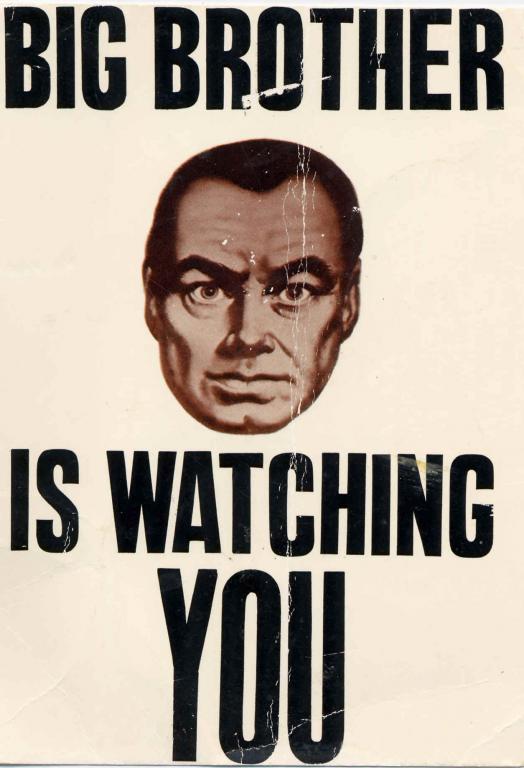
1984 is one of those classics about which references are always being made, and it seems like everyone has a general idea of the plot, whether or not they've read it.

I knew it was one that I needed to read, but had always put it off, thinking it would be too depressing.  I am so glad I finally read it and recommend it wholeheartedly.  If you've not read it, make this the next book you do read!


While Orwell's dystopia is a terrible place, the book was not so much distressing as thought-provoking.  Like Bradbury's Fahrenheit 451, I also found it disturbingly prophetic.  NewSpeak made me think of the horrible text message shorthand, and the Ministry of Peace was frighteningly similar to the way current governments present the need for war.  As for the Two Minutes Hate. . . How often have we seen a more subtle version of this in the recent past?!

I thought a great deal about how easily people can be "brain-washed" into living in horrid situations or doing vile acts by the government or other powerful institutions--good people, too, with honest intentions who think they are doing the right thing.

I thought about the fact that Orwell wrote this not long after the ending of World War II, and how Hitler's Germany must have been foremost in his mind.

I also thought about the control of history; the victors always write (and sometimes rewrite) history.  This is nothing new, and continues to this day.


 I felt frightened at times, by how similar some of the situations were to today's society.

I was enthralled by Orwell's prose; I had expected it to be dusty, dry, and yet it was alive and relevant.

I felt so much sadness for Winston; he was so real to me that I was emotionally invested in his journey.

I did feel confused by the Party requirements, and struggled to comprehend it fully.  I felt that it would have been better if Orwell had given that explanation early in the book, and more completely.  However, who am I to judge?!  I assume he had an excellent reason for waiting as long as he did, and my lack of understanding  was the fault of the reader, not the writer.


"The horrible thing about the Two Minutes Hate was not that one was obliged to act a part, but that it was impossible to avoid joining in."


"Nothing was your own except the few cubic centimeters inside your skull."

"If the Party could thrust its hand into the past and say of this or that event, it never happened — that, surely, was more terrifying than mere torture and death?"

"The object of waging a war is always to be in a better position in which to wage another war."

"A peace that was truly permanent would be the same as a permanent war. This—although the vast majority of Party members understand it only in a shallower sense—is the inner meaning of the Party slogan: War is Peace."

"All rulers in all ages have tried to impose a false view of the world upon their followers."

"We know that no one ever seizes power with the intention of relinquishing it. Power is not a means; it is an end. One does not establish a dictatorship in order to safeguard a revolution; one makes the revolution in order to establish the dictatorship. The object of persecution is persecution. The object of torture is torture. The object of power is power."

"WAR IS PEACE
FREEDOM IS SLAVERY
IGNORANCE IS STRENGTH"