Showing posts with label memoir. Show all posts

Sunday, March 26, 2023

Six For Sunday: Yellow

Six for Sunday is a feature by Steph at A Little But A Lot

This week's  Six for Sunday  topic is "yellow books".  What a cheerful springy color!  I know I could have picked any yellow tomes, but I wanted to be able to share a photo, so I used books I own.


1.  The Whispering Rabbit and Other Stories: Margaret Wise Brown, author; Garth Williams, illustrator (1965)
I'm reusing this book from last week's post, because it was the first one to pop into my mind.  Despite it's well-loved condition, that lovely yellow cover is still bright and cheerful!


2.  Men of Iron by Howard Pyle (1891)
This 1919 edition came from the library's used book sale back in the late 1980s.  The dust jacket is cracking a bit at the spine, but otherwise, it's still in good shape and quite yellow.


3.  The Flight of the Falcon by Daphne du Maurier (1965)
The color of this original 1965 dust jacket didn't photograph well, but it's a rich goldish-yellow.  Du Maurier is one of my favorite authors.  Her unique plots, excellent writing, and talent for twists make her books fascinating, engrossing, and sometime even unsettling.


4.  Treasure Island by Robert Louis Stevenson (1883)
This is the 1986 Oxford Pocket Classics edition, a nice range of yellows.  I've never read this book, nor seen a movie version, so I only know what I've picked up through reference in other works.  I don't know that I will ever be moved to read it, but I love this little edition.


5.  The Country Diary of an Edwardian Lady by Edith Holden (1977)
This lovely little volume is the posthumous printing of British artist Holden's 1906 nature journal, gorgeously illustrated with her drawings.  My 1982 copy is a softcover of a pastel shade of yellow.


6.  The Diving Bell and the Butterfly by Jean-Dominique Bauby  (1997)
Bauby's haunting memoir tells of the stroke that left him with locked-in syndrome. He dictated it, letter by letter, by blinking his one responsive eye when his helper spoke the correct next letter.  I was so moved by it, that I gifted it to everyone that year I read it.


So, there are six lovely yellow books from my shelves -- do you own any or have any favorites of that shade?


Thursday, February 2, 2017

Furiously Happy by Jenny Lawson

Furiously Happy
Jenny Lawson
5/5 stars

In Lawson's memoir, she shares funny stories of her life along with more serious stories about her mental illness.  The book is often laugh-out-loud funny, but there were also times that I cried.  She encourages the reader to enjoy--be furiously happy in fact--the times that are good, to make memories for the bad times that will inevitably come.

I can't recommend this book universally, as her humor is often what would be considered offensive by some.  Also, as she points out in the introduction, a person without mental illness may not be able to appreciate some of the experiences she recounts.  I'll be brave, thanks to her example, and simply state that I was able to connect with nearly every thing, and even learn from some.

The bottom line is that, with her own brand of humor, Lawson uses this book to let those with mental illness know they are not alone.  Thank you Jenny.


(Note: It's rare for me to give 5 stars.  The book has to be jaw-droppingly excellent or on a literary plane that knocks my socks off.  However, I will admit that I scored this book 5 stars on emotional effect alone.  It's not Slaughterhouse Five or Persuasion, but it hit me right in the gut, and taught me a few things about myself.  That's worth 5 stars as far as I'm concerned.)


Sunday, August 14, 2016

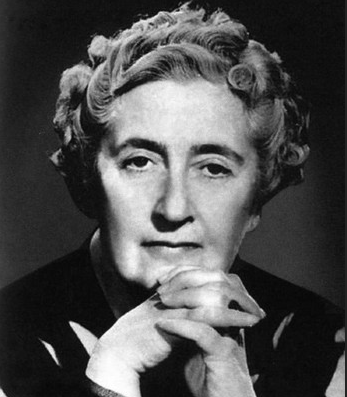
An Autobiography by Agatha Christie


An Autobiography

Agatha Christie
1977
5/5 stars

Agatha Christie was born at the end of the Victorian era, and lived until 1976.  Her experiences as a child, in both World Wars, and helping her archaeologist husband  make for fascinating reading.  The details she remembers make her world come alive.


She wrote this autobiography as if she were conducting a conversation with the reader.  She fills it with memories, opinions, and chit chat.  At one point, she states, "I was severely criticized for not keeping to the subject" by her composition teacher, and her autobiography shows that she never grew out of this.  She rambles from one topic to another, then back again, with honesty and excitement.  As she unapologetically says, "one thing does so lead to another but why shouldn't it?"  The charm of the book is this wandering about, giving the reader such a vibrant picture of the woman behind the novels.

Despite it's length, I was never bored with her autobiography, as Christie's wit and warm personality make it a delight to read.


Saturday, July 16, 2016

Why the Dutch Are Different by Ben Coates

Why the Dutch Are Different
Ben Coates
3/5 stars

(I was given this ARC by the Amazon Vine program in return for an honest review.)

In Why the Dutch Are Different, a Brit living in the Netherlands writes a mix of travelogue, history, anecdotes and personal narrative apparently with the intent of showing just why the Dutch are different.  Coates visits throughout the Netherlands and, in a rambling way, gives a great deal of information about each location.  For the most part, though, this information gives a feeling of how the Dutch came to be "Dutch", but not why they are different.  Frankly, he covers that early in the book, with the reason for the Dutch being how they are due to the obvious answer of land and water issues--an answer which honestly does not take nearly three hundred pages to explain.

This book is densely packed with information; so much so that it is overwhelming.  Since much of it didn't seem to relate to the point I was expecting him to eventually make (why the Dutch are different), and since the prose was not engaging, I found myself wanting to skim and skip.  I think this book would be best read by picking it up occasionally and reading one or two of the short essays, instead of trying to read it all at once.

Coates seems ambivalent toward the Dutch.  At one moment he is admiring their ingenuity, the next he is using stereotypes in a derogatory way.  I'm sure it's his way of introducing humor  (". . . shared the common Dutch belief that there was no such thing as too much hair gel"  and "towns with names that could choke a child") but it seemed disrespectful to the people that he was showcasing.

Furthermore, while Coates writes well technically, there was no sparkle to his prose; he never pulled me in and made me genuinely interested.  I don't know if this is the fault of the writer or of the reader.

Why the Dutch Are Different is certainly interesting, but not gripping.  I think a better title--a more achievable central idea--and a lot of editing out of anecdotes would have improved it.  This is, of course, only my personal opinion (which is what a review is, after all) and I've no doubt it will appeal more to some readers than it did to me.

Note: This is just my opinion; 41% of the reviews are 4 stars.

Friday, March 21, 2014

Chasing the Rose: An Adventure in the Venetian Countryside by Andrea Di Robilant


Chasing the Rose: An Adventure in the Venetian Countryside
Andrea Di Robilant
5/5 stars

I was given this book by the Amazon Vine program in return for an honest review.

In Chasing the Rose, di Robilant chronicles his attempts to uncover the identity of a pink rose, lightly scented of peaches and raspberries, found on a former family estate. This rose was most likely brought back from France by his great-great-great-great- grandmother Lucia, and seems to be one of the "lost" old rose varieties.


In this academic and horticultural journey, di Robilant introduces the reader to rose growers and rose species, gives a history of roses in Europe, shares how Lucia developed a passion for roses from the Empress Josephine, and allows the reader to join him in his quest to identify and register his mystery rose.

Chasing the Rose is well-written, with smooth and graceful prose in a charming style, enhanced by elegant illustrations. In fact, reading this memoir is akin to a walk in a rose garden: the story paths meander at a slow and luxurious pace, sometimes winding back upon themselves, but with the end result being a thoroughly delightful experience.


Thursday, July 14, 2011

Reading Lolita in Tehran

Reading Lolita in Tehran
Azar Nafisi
2003
5/5 stars

Nafisi has written not an autobiography, but a story of her love affair with certain books and authors. She divides her life into four important phases, and the four books or authors that influenced her during that time in her life. It is a mix of personal memories, important moments in Iranian history, what she was reading at the time and how it colored her impressions.

She begins with what would be the next-to-the-last sequentially, the start of her home class and the reading of Lolita. That Nafisi is an excellent literature professor shines through from the beginning. She doesn't merely mention the books, she discusses them, as though with a class, discussing plot, characters, details, meaning. I, who had never been interested in Lolita or Nabokov, became convinced of his worth solely due to her enthusiasm and passion for his works.

She follows with the Iranian revolution and the subsequent "trial" of Gatsby in her classroom. Henry James accompanies the times following the revolution, the war with Iraq, her feelings of uselessness and her return to teaching. She ends with Jane Austen, more about her home class, how she ended up in America and where all her "girls" are now.

Though this could have easily been a depressing book, about life in Iran, it is not. Instead, Nafisi has written about the beauty and hope of the novel, how it affected her and how she wanted it to affect her students.

Nafisi is a kindred spirit to all us ardent bibliophiles. She expresses in words the passion, exhilaration and transfiguration I often feel during and after reading a novel and has lit a fire in me to re-read several classics she mentioned. This is definitely a five star book!

(Originally read/reviewed in 2004.)

Wednesday, July 13, 2011

Geisha, a Life

Geisha, a Life
Mineko Iwasaki
5/5 stars

I found this a fascinating book, filled with glimses into the culture and customs of Japan. I knew little of Japan before I read it, but Mineko filled in many gaps and clarified many misconceptions.

She was the most successful geisha (actually "geiko") of her time--beautiful, graceful and determined. And yet, she grew tired of the life, and retired at the very early age of twenty-nine, ending the ancient Iwasaki line.

She begins her book with her early childhood and her reasons for becoming a geiko. She takes the reader through training and all it's rigours through to her enormous success. She alludes to her disillusionment with the geiko life, and to her attempts to reform the educational traditions, but does not specify any of these. I was disappointed in that, for, having watched her mature in this book, I would like to have known more about her reform attempts, to have seen her in that role.

Geisha, A Life is not the most well-written of books, which could be due to either author or translator. But then, that doesn't really matter. Let's face it. . . no one reads an autobiography for literary merit. Autobiographies are read in an attempt to KNOW the writer, and in that aspect, Mineko succeeded--I felt like I was ending a conversation with a good friend when I closed this book.

(Originally read/reviewed in 2004.)

Tuesday, July 5, 2011

Standing Alone: An American Woman’s Struggle for the Soul of Islam by Asra Q. Nomani

Standing Alone: An American Woman’s Struggle for the Soul of Islam  
Asra Q. Nomani
5/5 stars

Journalist Asra Nomani is a woman of much complexity-she is a single mom, a career woman and an American Muslim. The birth of her son Shibli, and her desertion by Shibli's father, marks a turning point in her life and leads her to give more serious thought to her spiritual life, the result of which is her desire to participate in the hajj, the Muslim pilgrimage to Mecca.

Standing Alone is the very personal memoir of Nomani's experiences during the hajj, of her struggles as a woman in what has become a male dominant religion, of her search for a God of love among all the dogma, and finally of how the journey helped her redefine her spiritual life. She examines her life prior to the hajj, tries to work out the knotty problems of issues like pre-marital sex and divine forgiveness and the horror that some have done in the name of her faith. Nomani bares her heart and her soul to the reader as she seeks her truth.

This books is more than just a spiritual journal, though. It also gives outsiders a closer, clearer few of Islam, it's practices and it's history. I found it to be not only enlightening, but very timely for our age.

Ms. Nomani has opened a new world for me by helping me be rid of many stereotypes and prejudices that I had unwittingly harbored. I hope that others will read it and find the same release from ignorance and a renewal of love and respect for others.


Saturday, July 2, 2011

Married to Bhutan: How One Woman Got Lost, Said "I Do," and Found Bliss

Married to Bhutan: How One Woman Got Lost, Said "I Do," and Found Bliss
Linda Leaming
Paperback: 264 pages
Publisher: Hay House (April 1, 2011)
read and reviewed ARC, courtesy of Amazon Vine Program
4.5/5 stars


In Married to Bhutan, Leaming tells of how she visited Bhutan, fell in love with the country, and sold everything she had to move there. She became a volunteer English teacher at an art school, striving to become part of the community and always finding new reasons to love Bhutan. Then, something unexpected happened: she and an artist at the school fell in love with each other and begin a traditional Bhutanese courtship that culminated in marriage. Leaming's love for Bhutan and her love for her new husband, Phurba, compliment each other and give her the emotional strength she needed as she continued to adjust to her new country.

Leaming writes about Bhutan as one writes of their beloved; it so obvious from her prose how deeply affected she is by the people, terrain and culture around her. She weaves this love into the history and stories she tells, and her love for Phurba adds to the depth of what she shares.

She often compares Bhutan to the U.S., but never in a condescending way, Instead of making a judgment on one way or the other, she simply presents the two ways and leaves it to the reader to form any opinions.

Married to Bhutan is a gentle book, and one that makes the reader laugh, cry and think. Most of all, though, the reader walks away feeling glad to have witnessed such a beautiful love story.


Saturday, March 5, 2011

Sideways on a Scooter: Life and Love in India

Sideways on a Scooter: Life and Love in India
Miranda Kennedy
Hardcover: 352 pages
Publisher: Random House (April 26, 2011)
Reviewed ARC courtesy of Amazon Vine.
2/5 stars

Miranda Kennedy quits her NPR job and moves from NYC to Delhi to be a freelance reporter, expecting a grand adventure in the footsteps of her parents and great-aunt. She isn't expecting to find that certain things, taken for granted in the U.S., will be difficult for a single woman. Sideways on a Scooter is Kennedy's recounting of those difficulties, as well as the difficulties she sees women native to India experience. She tells of close friendships she makes, of her observations of the dating and marriage experiences of her friends, of the life experiences of her servants and of some of the things she learned as a result of living in India.

Sideways on a Scooter sounds wonderful when put briefly like that, and it should have been a excellent book, as all the elements of a fantastic memoir were present. Unfortunately, Kennedy's narrative style failed her and the story is instead chapters comprised of a messy conglomeration of her surprisingly intolerant opinions, rambling retellings of India's history and her anecdotes, the three of which rarely seem to connect together. When writing about her experiences she has an unsettling way of crossing from the first person point of view into an omnipotent story teller as she tells parts of her story that she really couldn't have known at that time. I gathered, at the end of the book, that perhaps she went back later and interviewed the people in question as to what they were thinking and feeling at the time. This is mere speculation on my part, though, and even if that were certain knowledge, it would do little to alleviate the awkward storytelling style.

In addition, she tended to flip-flop between various time periods in her life in Delhi within a chapter, making for confusion to the reader. Again, as with the history and opinions, these various episodes rarely tied-in together by the end of the chapter, so the point of it is uncertain.

Despite the unprofessional writing style, Kennedy's experiences were very interesting, and I did want to read them, did want to know what happened to her various friends and acquaintances. It's for that reason I give this book two stars. This book would have been unimaginably better had Kennedy stuck to only her experiences there and left out her attempts at history, current events and op-eds, which only made her appear like a spoiled American complaining about a country that is different from her own. Kennedy would have benefited from a reliable editor or pre-reader with the honesty to point out these things. As it stands, Sideways on a Scooter is a poorly written memoir and I would advise fellow readers to give it a miss.


Note: This is my opinion; on Amazon, 43% of the reviews were 5 stars.